Retaining Wall Materials for Muskoka: Armour Stone vs Block vs Natural Stone
Muskoka’s granite bedrock, rolling slopes, and freeze–thaw cycles make retaining walls work hard. If you are planning retaining walls for a lakefront, cottage lot, or year‑round home, the right material is the difference between decades of stability and constant repairs. This guide compares armour stone, segmental block, and natural stone so you can choose a wall that fits your property and your style.
We wrote this with Muskoka conditions in mind: spring melt, clay or sandy soils over bedrock, and sites from Bracebridge and Gravenhurst to Huntsville and Lake of Bays. The examples below show how each material performs in local settings, what it looks like up close, and where it tends to shine.
What Matters Most in Muskoka Retaining Walls
Before picking a material, think about what the wall has to resist. Height, slope angle, soil type, and nearby water all change the design approach. A driveway that sees heavy vehicles needs different performance than a cottage pathway or a shoreline ledge that meets ice and waves.
Drainage is also critical. Water management is non-negotiable. In Muskoka, trapped moisture turns to ice in winter and expands, pushing on the wall from behind. Good builders plan for this with free‑draining backfill and ways for water to exit safely. Requirements can vary by site and season, so design details should match your property’s conditions.
Armour Stone: Big Presence, Lake‑Friendly Strength
Armour stone uses large, natural boulders or quarried blocks. Pieces are heavy and deep, which helps resist movement on slopes and shoreline edges. The look is bold and rugged, a natural match for Muskoka’s granite and pine landscape. Armour stone stands up to Muskoka’s ice and wave action better than small units because each piece has mass and face depth.
- Best fits: shorelines, taller grade changes, rustic cottage settings, winding drives where a natural look softens the structure
- Considerations: large equipment access, site space for staging stone, and thoughtful step or cap transitions near patios
Because the stones vary, skilled placement matters. Joints should be tight and staggered, and the wall should lean into the slope at the correct batter. Good builds use deep stones, not just face rock, so the structure ties into the slope rather than sitting on the edge.
Segmental Block Systems: Clean Lines and Predictable Performance
Segmental concrete blocks create crisp geometry and a consistent finish. Units interlock, and walls can be engineered to support driveways or parking pads when the design calls for reinforcement. Curves, steps, lighting, and caps integrate neatly, which suits modern cottages and year‑round homes.
- Strengths: uniform appearance, modular design for curves and terraces, reliable engineering data for height and loading
- Considerations: matches best with contemporary or transitional styles; color and texture selection should complement Muskoka granite and wood tones
Engineered blocks shine when you want strength with a refined look near patios, garages, or walkways. With proper base, drainage, and backfill, block walls handle freeze–thaw well and keep their alignment over time. Details like coping stones, integrated steps, and low‑voltage lighting can make outdoor areas safer and more comfortable after sunset.
Natural Stone Walls: Timeless, Handcrafted Character
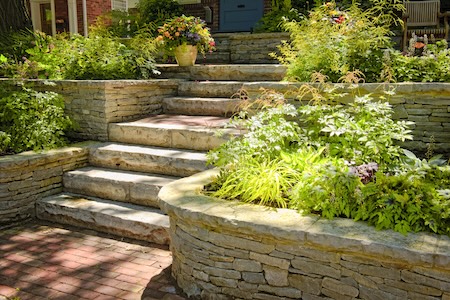
Natural stone uses smaller, hand‑set pieces such as granite, limestone, or fieldstone. The character is warm and layered, especially in garden spaces or along cottage paths. With the right depth and installation, natural stone can manage modest grade changes and feels at home among cedar, fern, and rock outcrops.
Natural stone often looks best for low garden terraces, seat walls, or transitions between a patio and lawn. Because stones vary in size and thickness, skilled shaping and a well‑planned face are essential for both stability and beauty. Consider pairing natural stone with armour stone at taller sections to keep the crafted look while gaining mass where you need it.
How To Choose the Right Material for Your Property
Start with function, then confirm the style. If the wall is near a driveway or supports parking, favour materials that can be engineered to carry loads and include reinforcement where required. If you are along a lake or a steep slope, heavier units with deep embedment help manage pressure and water better than thin face stone.
Think about the setting. Armour stone merges into rock outcrops and shorelines. Block systems give patios and entries a polished edge. Natural stone adds handcrafted charm to gardens and path transitions. For a full view of compatible features, browse our hardscaping options to see how steps, landings, and terraces come together without clashing.
Seasonal timing matters too. Spring melt, summer dryness, and late‑fall freezes each affect site access and soil conditions. Review recent projects and planning advice on our landscaping tips page to visualize how your space changes across the year before finalizing materials.
Appearance, Maintenance, and Longevity
Each material tells a different visual story. Armour stone reads bold and organic, especially when paired with native plantings and lighting that grazes the stone face. Block systems look tailored and consistent, which many homeowners prefer near entries and patios. Natural stone blends textures and tones for a classic Muskoka feel, particularly in smaller walls and seating edges.
All quality walls should be low‑maintenance when built correctly. Expect the occasional check after major freeze–thaw cycles or heavy spring runoff. Armour stone may host small plants in gaps by design, which many homeowners like. Block and natural stone walls benefit from clear drainage paths and clean caps so water sheds quickly.
Performance In Common Muskoka Scenarios
Shorelines and steep slopes call for mass and deep embedment. Armour stone is often the first choice here because individual pieces are heavy and stable. Where the grade change is moderate, but the look must be clean, block systems are a strong fit, especially beside patios or garages. For garden terraces and cottage paths, natural stone sets a relaxed tone while guiding foot traffic.
Driveways that sit above a wall create live loads from vehicles. In those cases, block systems with proper reinforcement give predictable results, and armour stone with adequate depth also performs well. Natural stone can work for low edges away from vehicle loads, tying planting beds and steps together without feeling overbuilt.
Design Details That Extend Wall Life
Longevity in Muskoka comes from basics done right. A stable base that suits local soils, well‑graded drainage stone, and weep paths behind the wall all work together. Caps and step treads should overhang slightly to help move water forward, not back.
Never trap water behind a wall. Open joints, protected weep paths, and free‑draining backfill let pressure escape before freezing temperatures arrive. At transitions, keep step rises consistent and treads deep enough for safe footing during shoulder seasons when paths are damp or icy.
Where walls meet patios or wood structures, expansion gaps and flashing protect finishes from moisture. Lighting along steps and seat walls makes evening use pleasant and supports safety for guests arriving after dusk.
Style Pairings That Work In Muskoka
Armour stone pairs well with rough‑hewn timber, steel accents, and native shrubs like dogwood and juniper. Block systems look sharp with modern railings, composite decking, and paver patios in complementary tones. Natural stone loves ferns, hostas, and soft path lighting that glows rather than glares.
Consider how materials meet the home’s siding and roof colors. Grey granite tones can cool a sunny patio, while warmer browns and buff shades soften north‑facing gardens. The right match makes the wall feel like it grew with the property instead of being added later.
Environmental Considerations Around Water
Near lakes and rivers, controlling runoff is about more than appearance. Directing clean water through designed outlets protects slopes and plantings. The surface finish also matters: rough stone faces interrupt wave energy better than slick ones, and terraces help break tall grade changes into stable steps.
Plant choices around walls can help hold soils and reduce splashback. Native grasses and groundcovers tolerate shallow soils, while deeper beds may host shrubs that root into pockets between stones. Ask for plantings that work with your wall rather than against it to keep maintenance simple.
Putting It All Together
For many Muskoka properties, the best solution blends materials: armour stone for the tall, hardworking sections; block for crisp patio edges and steps; and natural stone for intimate garden rooms. The key is a coordinated plan that respects drainage, slope, and how people move through the space. Thoughtful lighting and planting bring the structure to life at night and in shoulder seasons.
If you want examples tailored to your lot, our team can walk the site, note slope and soils, and recommend a build sequence that limits disruption to driveways or docks. Seeing the property in person helps align the wall with the way you use the space on weekends and holidays.
Why Homeowners Choose Artisan Landscapes Muskoka Inc.
We design and build walls that fit Muskoka’s terrain, not just the catalog. From first visit to final walkthrough, our focus is on drainage, alignment, and finishes that last. When craftsmanship meets a plan for water and frost, walls stay true through many winters.
Browse our recent work and see how material choices translate on real sites. You can also explore how patios, steps, and terraces connect with walls so circulation feels natural from driveway to dock. To dive deeper into specifications and local fit, start with our dedicated retaining wall service page and note ideas you like.
Learn more about our landscaping services in Muskoka and see how material, slope, and style intersect at the cottage and in-town homes alike.
Ready To Plan Your Wall With Confidence?
If you are weighing armour stone, block, or natural stone for a new wall or a replacement, we can help you see the tradeoffs on your site. Call 705-783-4507 to book a site visit with Artisan Landscapes Muskoka Inc.. We will walk the grade, discuss water paths, and confirm a material that matches the look you want and the support you need.
When you are ready to move ahead, review options and next steps with our retaining wall specialists. A clear plan keeps the project smooth, protects your landscaping, and makes sure the wall still looks great after winter.
MAKE YOUR OUTDOOR LIVING SPACE BEAUTIFUL WITH ARTISAN LANDSCAPES MUSKOKA INC IN HUNTSVILLE AND SURROUNDING AREAS